

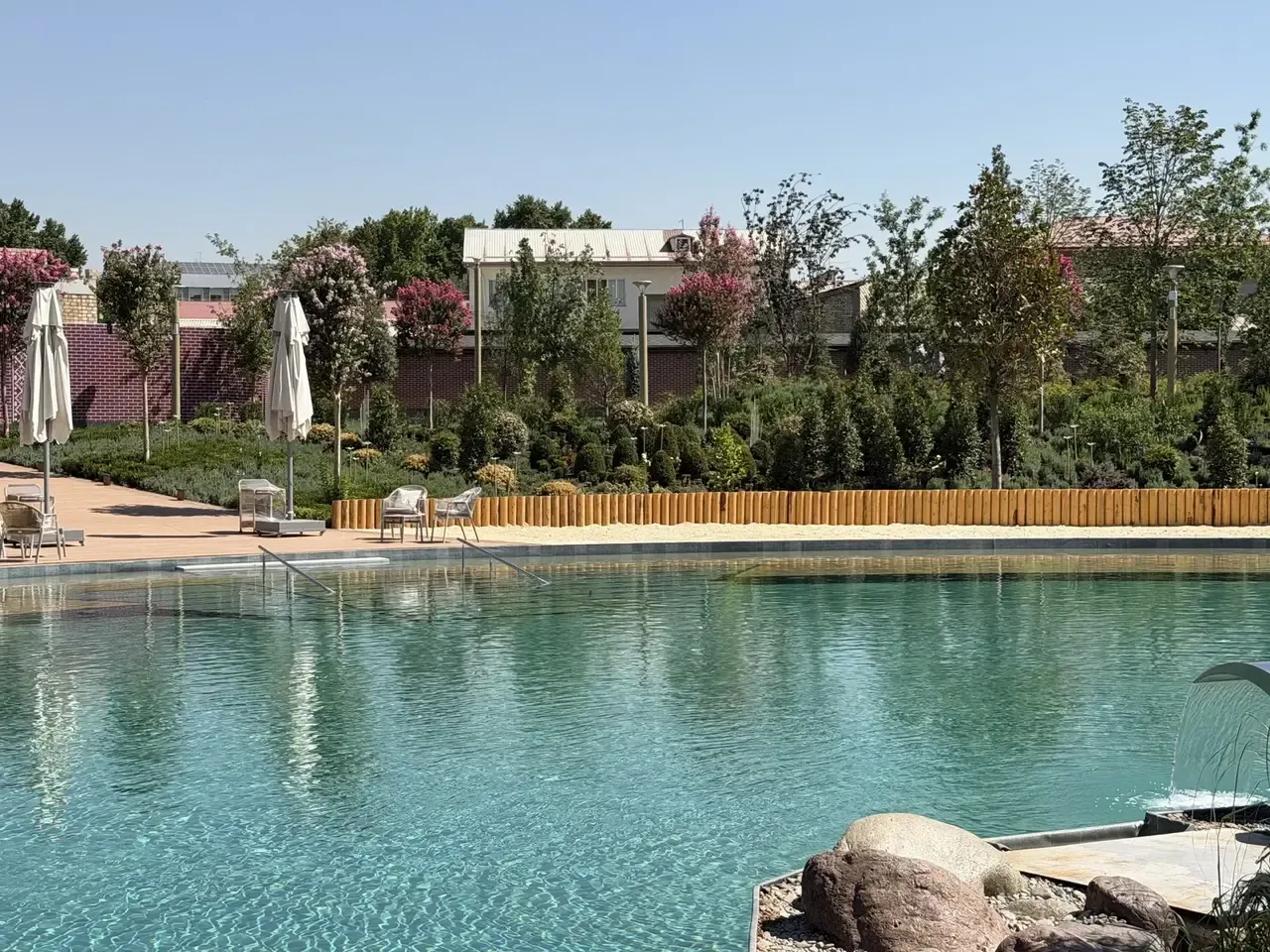
One of the most important decisions when planning a pool for a garden or a facility is how the water will be kept clean. The chlorinated pool has been the standard solution for decades. The natural swimming pool (biological swimming pool) is a fast-growing alternative that treats the water not with chemicals but with plants, beneficial microorganisms and biological filtration. In this article we compare the two systems fairly, from how they work to cost, maintenance and health.
In short: what is the main difference?
In a chlorinated pool, cleanliness is achieved with chlorine (or a similar disinfectant). Microorganisms are killed chemically and the water is circulated through a sand filter. In a natural swimming pool, it is the ecosystem itself that keeps the water clean: plants and beneficial microorganisms in the filter medium consume the nutrients algae need to grow (especially phosphate and nitrogen compounds). Algae are not killed, they are starved.
How does a chlorinated pool work?
The logic of a classic pool is simple and proven over many years:
Pros: Easy and predictable to control, can be built in a small area, offers the classic clear blue look, complies with regulations for public pools and suits year-round use as an indoor pool.
Cons: Chlorine smell, eye and skin sensitivity, chlorine by-products (chloramines) that can irritate the airways especially in indoor pools, constant chemical purchase and dosing, regular draining, and an ecologically "dead" surface in the garden.
How does a natural swimming pool work?
A natural swimming pool usually consists of two zones: a swimming area and a regeneration (treatment) area. A pump circulates the water continuously; it is purified as it passes through the planted zone or a biological filter with a mineral/gravel medium. Leaves and pollen on the surface are collected by a skimmer. In projects with limited space, part of the treatment can be done by a technical biofilter unit instead of plants.
Pros: No chemicals are used, no chlorine-related eye or skin irritation, swimming feels like swimming in a natural lake, plants and wildlife (dragonflies, frogs) come to the garden, running costs are low and the pool blends into the landscape.
Cons: More space is needed because of the regeneration area, the initial investment is usually higher, the water has natural tones rather than glassy turquoise, correct design and expert construction are essential (an incorrectly sized system can have algae problems) and the planting season affects the look.
Comparison table
Cost: which one is cheaper?
There is no single answer, because cost depends on site conditions, pool size, filter type and landscape scope. In general, the initial investment of a natural swimming pool is often higher because of the treatment area, liner, plants and biological filter. On the other hand, the annual running cost is lower because continuous chemical costs such as chlorine, pH correctors and algaecides, and frequent water renewal, are eliminated. For this reason it is more accurate to decide based on the total cost of ownership over 10-15 years rather than the initial investment alone.
Health and comfort
While disinfecting the water, chlorine can react with organic matter and form by-products such as chloramines. These are associated with red eyes, dry skin and airway irritation in sensitive people, and the effect can be more noticeable in poorly ventilated indoor pools. These complaints do not occur in a chemical-free natural pool; however, a natural pool is not "sterile" either. Water quality should be monitored as for natural bathing waters, and hygiene rules such as showering before swimming should be followed.
Important note: Public pools such as hotels, facilities or municipalities are subject to local health regulations and operating rules. In such projects, which treatment method is accepted should be clarified with the relevant authority during the design phase.
How much work is maintenance?
Maintenance of a chlorinated pool is frequent and technical: weekly measurements, chemical dosing, filter backwashing and winter preparation. Maintenance of a natural swimming pool is closer to landscape work: cleaning the surface and skimmer, seasonal pruning of plants, topping up evaporated water and periodic system checks. There is no chemical testing or dosing, but it is recommended that someone who knows the system checks it a few times a year.
Which one should you choose?
Artsay experience
At Artsay we build biological ponds and biological swimming pools in Turkey and Uzbekistan. Our Dormon biological swimming pool in Uzbekistan and Tarabya biological swimming pool projects show how a naturally treated swimming area can work both at large scale and in a private garden. You can review our scope on the biological swimming pool systems page.
Frequently asked questions
Is swimming in a natural pool safe?
In a properly designed and regularly monitored natural swimming pool, the swimming area is separate from the planted treatment zone and the water is treated continuously. Keeping water quality at a level suitable for natural bathing waters is the design goal of the system.
Will there be mosquitoes or bad smell?
Because the water is constantly moving and the system works in balance, the problems of a stagnant pond are not expected. A correctly built system does not produce bad odours.
What happens to the pool in winter?
In the cold season the plants go dormant and the look changes. Use is mostly in the warm season; winter care and planning are clarified at the design stage.
Can an existing chlorinated pool be converted into a natural pool?
In many cases yes, but it depends on the structure, the size and the area available for treatment. It would not be right to give a definite answer without an on-site inspection.
How much space does a natural swimming pool need?
It depends on the design. The treatment area can make up a significant part of the total surface; where space is limited, solutions with technical biofilters can also be considered.
Let us define the right system for your project together
To discuss the pool solution best suited to your site and purpose, you can contact us. For other questions about biological systems, see our frequently asked questions article.


